 Miquel DEWEVER-PLANA
Sponsor : Amnesty International
Exposition : 12/09/2006 au 04/11/2006
Du mercredi au samedi de 13h30 à 18h30
Galerie FAIT & CAUSE
58 rue Quincampoix, 75004 Paris - Tél. +33 (0)142742636
Dossier de presse
Livre / catalogue
« Je t’en prie, emporte mes paroles pour que le monde sache ce que nous avons vécu, ce que nous avons souffert… Et j’espère que mon témoignage sera entendu… »
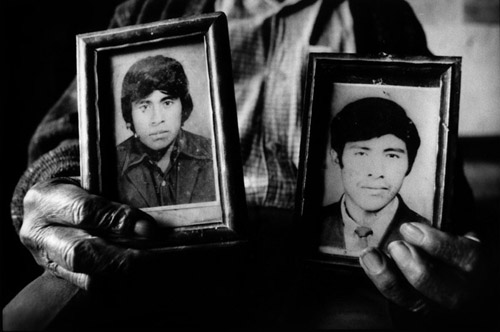
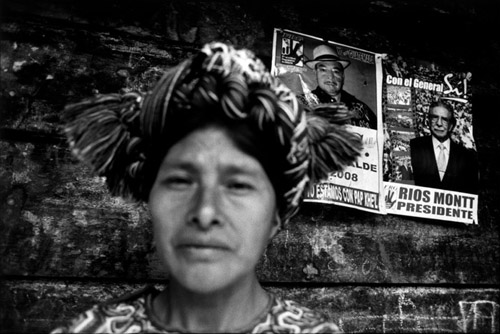
Tout comme doña Catarina, d’origine maya-ixil, des dizaines de victimes avec qui j’ai eu l’opportunité de partager le quotidien depuis plusieurs années, m’ont exprimé la même requête : emporte mes paroles. Extraire cette souffrance, enfouie en soi depuis plus de vingt ans, ajouté à l’espoir de faire connaître leur histoire au monde, leur permet de donner un sens à leur malheur.
Je n’en peux plus, que de douleur dans mon cœur lorsque je parle de cela, que de douleur lorsque les mots sortent du plus profond de mon être.
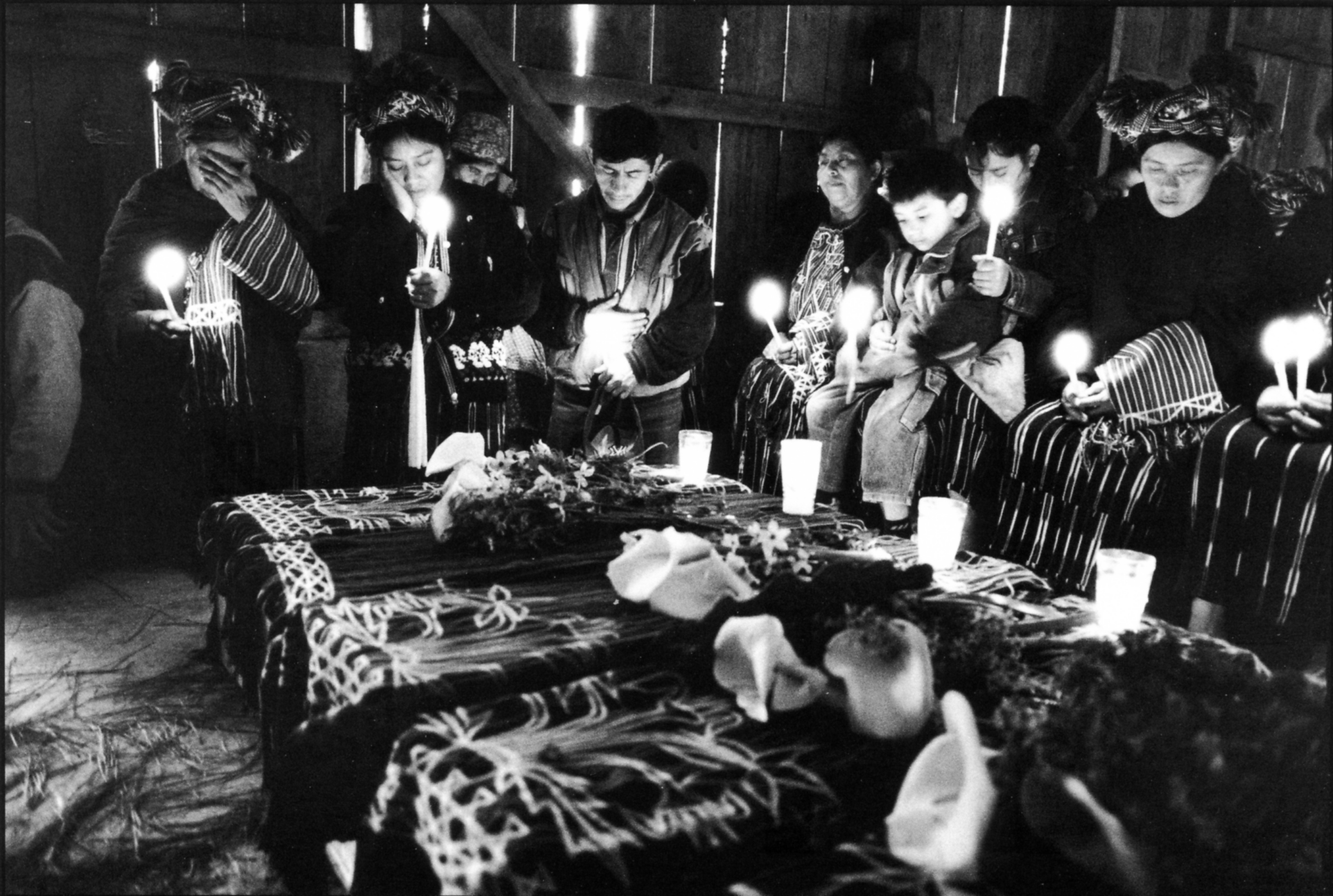
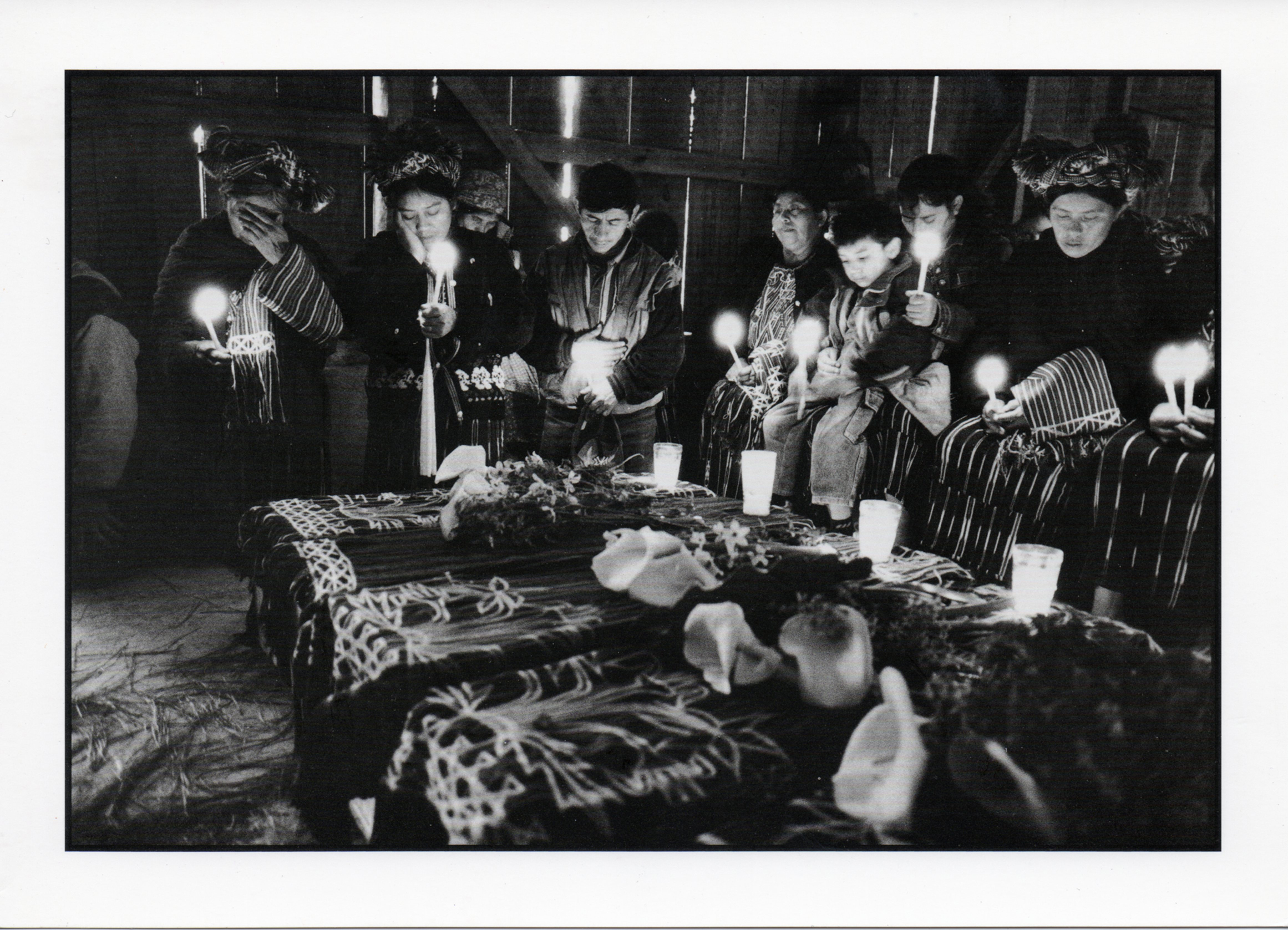
Témoigner n’est pas facile car cela suppose de se confronter une nouvelle fois à une réalité qui les a laissés psychologiquement détruits. Mais c’est néanmoins une réponse à ce silence forcé et finalement un devoir moral que de vouloir faire partager cette histoire aussi épouvantable que méconnue et ce, malgré les menaces, la méfiance, la peur, la honte ou ce sentiment de culpabilité « d’avoir survécu ».
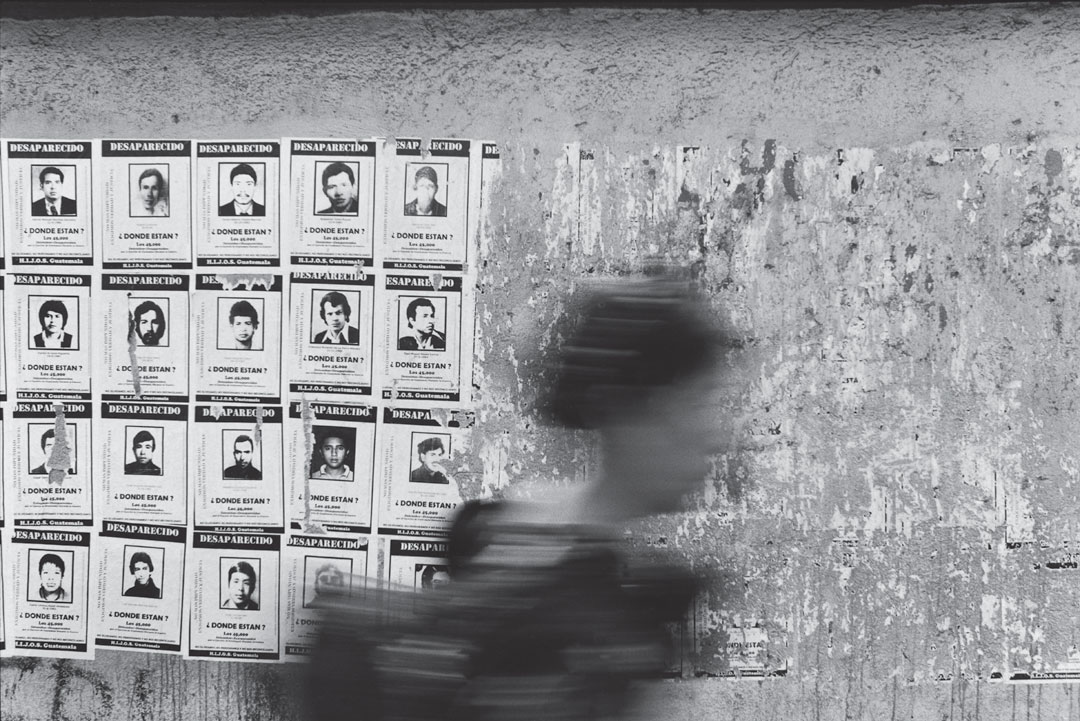
Les mayas, invisibles aux yeux des élites durant cinq siècles, se font aujourd’hui de plus en plus voir et entendre et oblige le pays à effectuer un travail de mémoire sur un conflit de trente-cinq années (1961-1996). Plus de 200 000 morts, 45 000 disparus, 667 massacres, 430 villages rayés de la carte, 150 000 réfugiés, un million et demi de déplacés, plus de 83% des victimes étaient mayas et 94% des massacres ont été commis par l’armée. Derrière ces chiffres épouvantables il y a des visages avec des noms et des prénoms qui ne pourront jamais être effacés de la mémoire des survivants.
Derrière ces chiffres épouvantables il y a des visages avec des noms et des prénoms qui ne pourront jamais être effacés de la mémoire des survivants.
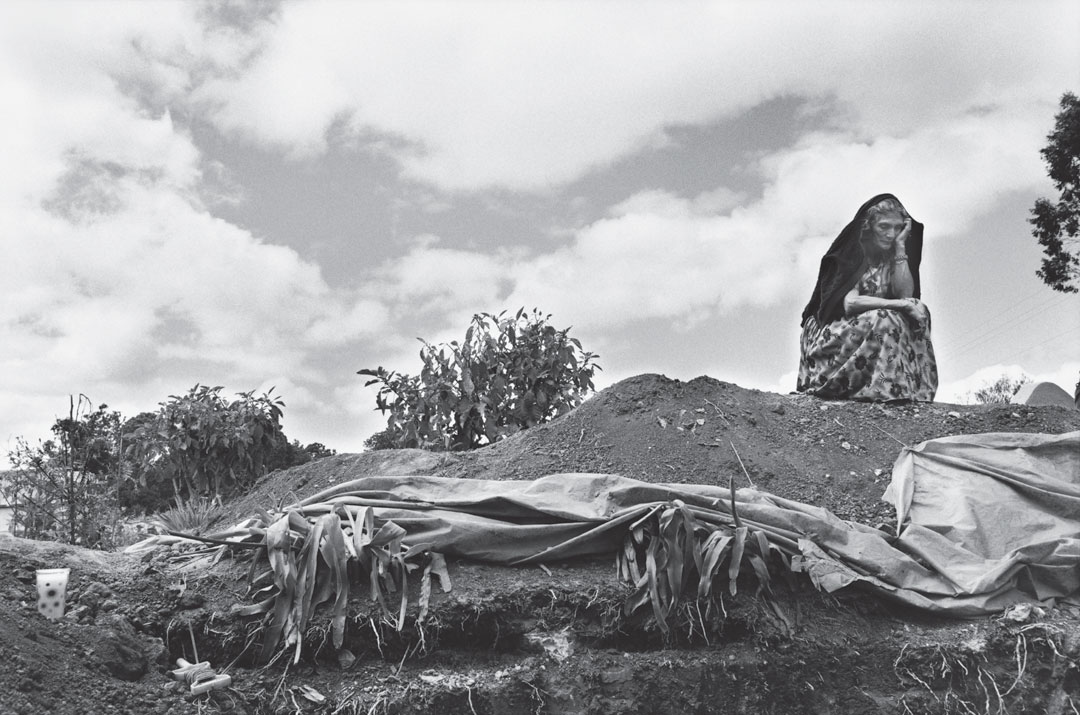
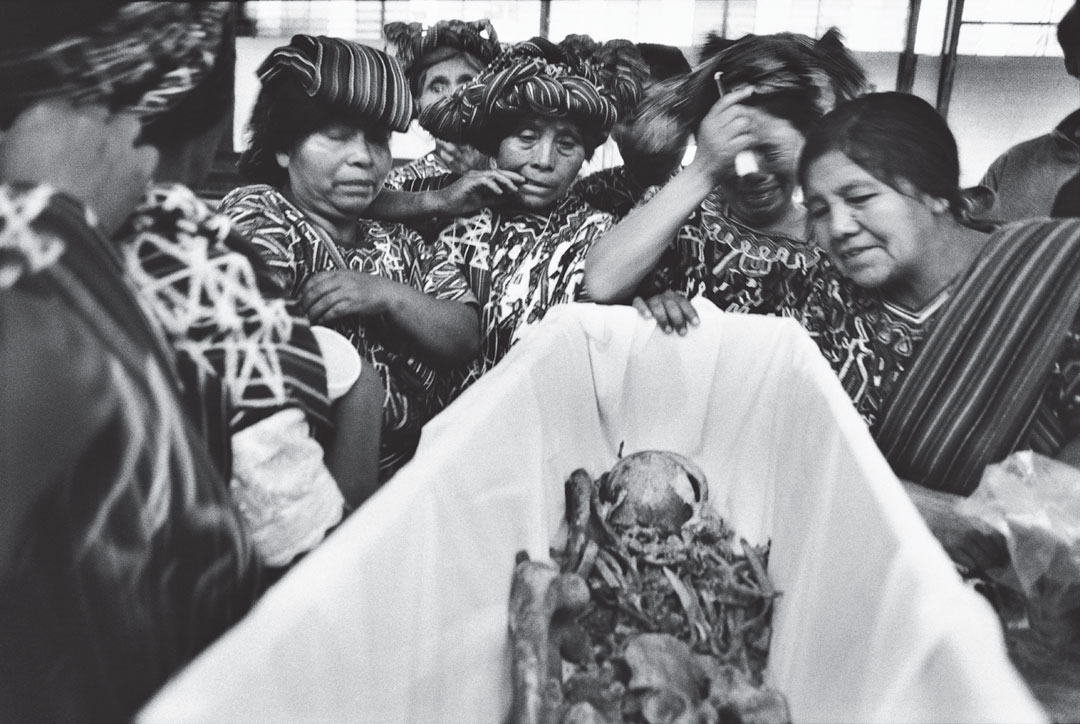
Cette histoire ignorée est aujourd’hui mise à jour grâce au travail des équipes d’anthropologues légistes. Elles procèdent à des exhumations un peu partout dans le pays à la recherche de ceux qui ne furent longtemps que des “disparus”. Des squelettes d’hommes, de femmes et d’enfants massacrés il y a plus de vingt ans, dont on retrouve maintenant les dépouilles enterrées dans des fosses communes, viennent nous raconter la vérité sur les atrocités vécues durant ces années de violence, car dorénavant les corps de nos défunts nous parlent et nous racontent…
Beneath the ground, the truth
« Please, bring away my words so that everyone can know what we have been going through and what we underwent… And I hope my statement will be heard… » Dozens of victims with who I had a chance to live everyday for many years asked me the same question as Dona Catarina: « bring away my words » Extracting this suffering buried within themselves for more than twenty years and added to the hope of sharing their story with everyone gives a meaning to their misfortune. I can’t bear it anymore, only pain remains in my heart when I talk about that, only pain remains when the words come from the deepest of my soul. It is not easy to testify as it implies to be confronted once more with the reality that has psychologically wrecked them. But it is somehow an answer to this forced silence and the will to share this story as dreadful as it is unknown has become eventually a moral duty in spite of threats, distrust, fear, shame or the feeling of guilt of « having survived ».
Today we can see more and more the Mayas, whereas they were invisible to the eyes of the elites for five centuries, and hear more about them as they compel the country to avow a thirty-five year old conflict (1960-1996). More than 200 000 deads, 45 000 reported missing, 667 massacres, 430 ruined villages, 150 000 refugees, a million and a half people displaced, more than 83% of the victims were Mayas and 94% of the massacres were perpetrated by the army.
Behind those terrifying figures, there are faces with last names and first names that will never be forgotten by the survivors. This unknown story is today updated thanks to the work of crews of medical anthropologists. They conduct unearthings all over the country looking for the ones that were « reported missing » for such a long time. The skeletons of men, women and children massacred more than twenty years ago that we are now finding as they were buried in common graves tell us the truth on the atrocities of those violent years because from now on the corpses of the deceased can talk and recount.
LA VERDAD BAJO LA TIERRA
Guatemala, el genocidio ignorado
“Por favor, llévate mis palabras para que el mundo sepa lo que hemos vivido y lo que hemos sufrido… Y espero que mi testimonio sea escuchado…”
Así como Doña Catarina, de origen maya-ixil, decenas de víctimas con las cuales tuve la oportunidad de compartir sus días desde hace ya muchos años, me repitieron la misma frase: llévate mis palabras. Una forma de sacar a la superficie todo ese sufrimiento acumulado durante más de veinte años, y la esperanza de que algún día el mundo se entere de lo ocurrido, les permite dar un sentido a su desgracia.
No puedo más, solo tristeza en mi corazón cuando hablo de ello, solamente dolor cuando las palabras salen de lo más profundo de mi ser.
Contar lo sucedido no es una cosa simple, ya que implica remover y afrontar una vez más una realidad que los ha destruido psicológicamente. Sin embargo, es también una respuesta a ese silencio forzado y finalmente un deber moral de compartir esta historia horrorosa y desconocida, a pesar de las amenazas, la inseguridad, el miedo, la vergüenza y ese sentimiento de culpa “de haber sobrevivido”.
Los Mayas, invisibles a los ojos del mundo durante cinco siglos, se hacen ver y escuchar de más en más y obligan a su país a hacer un trabajo de memoria sobre este conflicto que duró treinta y cinco años. (1961 – 1996). Más de 200.000 muertos, 45.000 desaparecidos, 667 matanzas, 430 pueblos borrados del mapa, 150.000 refugiados, 1.500.000 de desplazados, más de 83% de las víctimas eran mayas y 94% de las matanzas fueron cometidas por el ejército. Detrás de estos datos espantosos hay rostros con nombres y apellidos que permanecerán para siempre en la memoria de los que sobrevivieron.
Esta trágica historia ignorada hasta hoy es ahora conocida gracias al trabajo de antropólogos legistas. Equipos que proceden a la exhumación de cuerpos por todo el país en busca de los que fueron durante muchos años simplemente “desaparecidos”. Los esqueletos de hombres, de mujeres y niños asesinados hace más de veinte años de los cuales se recuperan hoy los restos enterrados en fosas comunes, nos cuentan la verdad sobre las atrocidades vividas durante esos años de violencia, ya que ahora los cuerpos de nuestros difuntos, nos hablan y nos cuentan…
Miquel Dewever-Plana
Guatemala: the devastating heritage of the civil war
According to the Historic Clarification Commission, the armed conflict that slaughtered the country between 1960 and 1996, resulted in more than 200.000 killed or disappeared – 83% Mayan origin – and more than one million of Guatemalans have been displaced inside the country. After 36 years of conflicts, the Peace Accord was signed in 1996, to implement a series of concrete measures to solve the land crisis and to battle against the subjacent causes of rural poverty, unequal land distribution and exclusion of Mayas from the political process.
Oscar Berger Perdomo took office as president in 2004, and he was committed in upholding
the Peace Accords, ensuring the respect for labour and rural population rights and prioritizing the exhumation of massacre sites where hundreds of victims of past human rights violations were buried in clandestine graves during the internal armed conflict.
Evictions are not the answer to land conflicts
Since coming to office, President Berger has accelerated evictions and ignored the consequent human right abuses: destruction of homes, violations of due process, discrimination against the rural workers and indigenous people.
The authorities are more willing to answer the wealthy land owners’ demands than execute the rights of rural workers and indigenous people.
Until today, the commitments of the Peace Accord remain unfulfilled and on April 6th 2006, approximately 400 indigenous people who lived and worked in coffee plantation areas at San José La Moca (Alta Verapaz department) were evicted.
The mortal heritage of the impunity
In 2004, in a historic decision, the Inter-American Court of Human Rights condemned Guatemalan state for the 1982 military massacre of 250 indigenous civilians, in Plan de Sanchez (Rabinal). The state was required to pay for reparations to the relatives of the human rights’ violations victims in which it has recognized its part of responsibility.
Nevertheless, the investigation of the cases of genocide or crimes against humanity committed at Guatemala in the past had no improvement. In this way, recognizing the disrespect of the guarantees established by law, the Constitutional Court has annulled, in 2005, a trial of the Dos Erres massacre case, in which Guatemalan army soldiers were accused of massacring more than 200 people. The case is still in instance.
Human rights defenders, witnesses and judicial officials that investigated cases of human rights violations have been victims of intimidations, death threats and attacks. The trade-unionists and the journalists are equally aimed. These attacks are regularly carried out by quasi official groups that, according to sources, collaborate with members of security forces
L’Unidad de Protección de Defensoras y Defensores de Derechos Humanos (UPDDH, Human Rights Defenders Protection Unit) that is involved in the investigation of those attacks, has documented 122 attacks against human rights defenders in 2004 and 224 in 2005. Between January and April 2006, the UPDDH registered 65 attacks
Amnesty International is a worldwide movement with the stated purpose of respecting and protecting the world’s human rights.
About Guatemala and the issues related with the civil war and its consequences, Amnesty International constantly performs the highest strict vigilance, monitoring and claiming for measures that are essential for the establishment of a State of Law, which was the aim of the Peace Accords and that corresponds to the aspirations and needs of the Guatemalan citizens.
Amnesty International is particular concerned with the problems of violations of the human rights that victimize the Guatemala’s indigenous community and it equally defends the vision of a world in which every person has the right to live with freedom and dignity in respect of his rights and culture.
Plus d’informations sur www.amnesty.fr