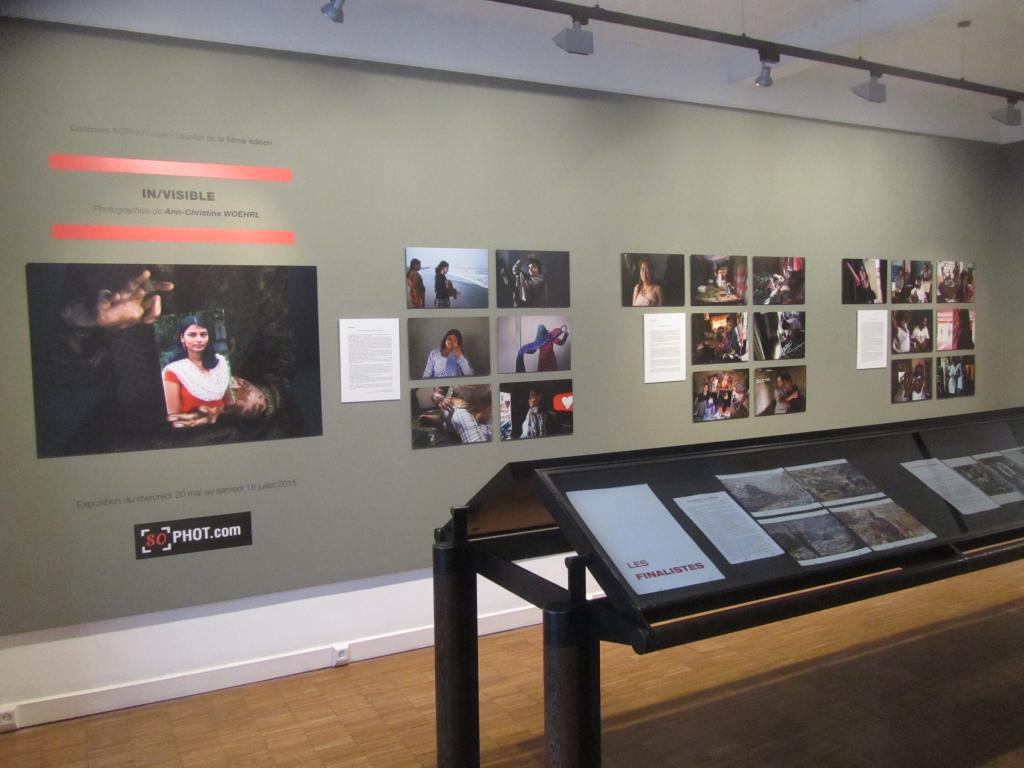
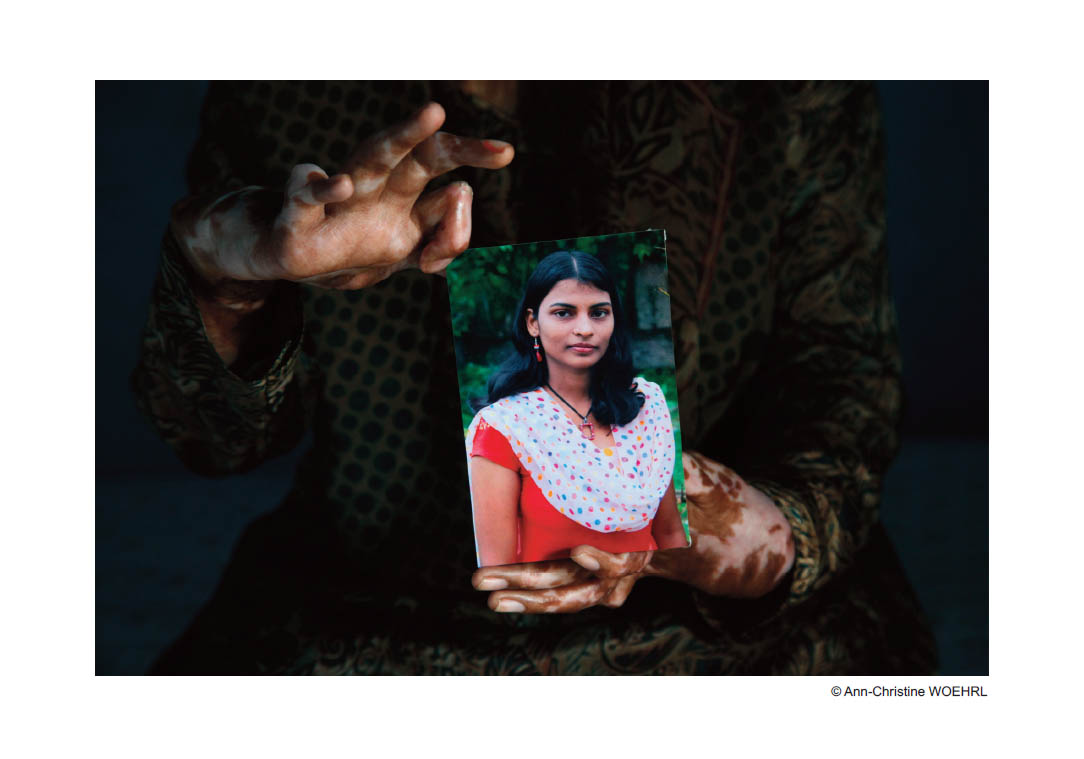
Lauréate du Prix SOPHOT 2015
Vernissage, le mardi 19 Mai 2015 de 18h à 21h
Exposition : 20/05/2015 au 19/07/2015
Du mercredi au samedi de 13h30 à 18h30
Galerie FAIT & CAUSE
58 rue Quincampoix, 75004 Paris - Tél. +33 (0)142742636
Dossier de presse
Livre / catalogue
2013 / 2014
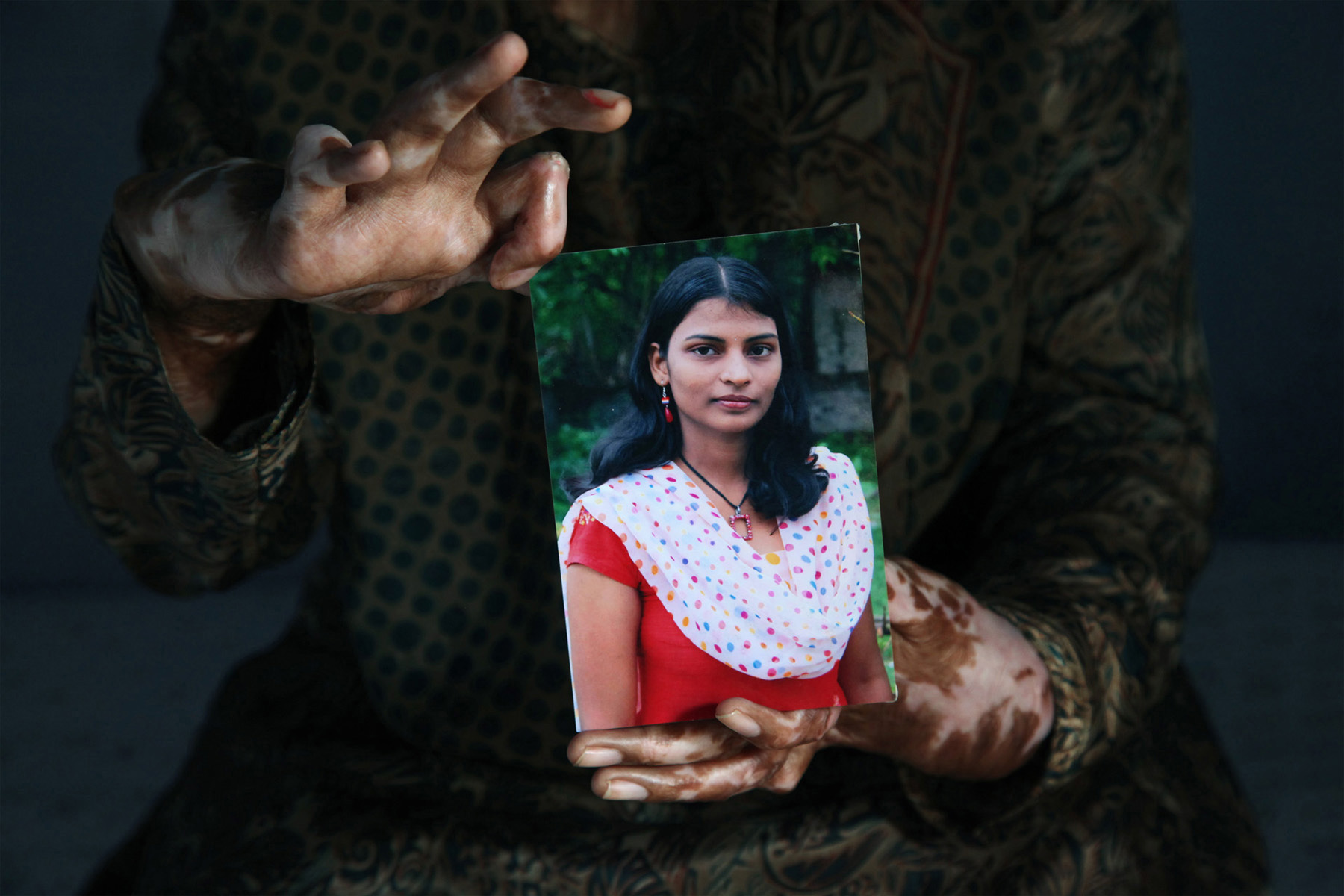
Ce sont leurs cicatrices qui attirent l’attention. Les gens regardent ouvertement ou les observent discrètement. Certaines personnes fuient leurs regards immédiatement parce qu’elles se sentent mal à l’aise ou veulent oublier ce qu’elles viennent de voir. Il est plus aisé pour une société de ne pas prendre connaissance de ceux qui sont différents, de les ignorer, voire de les rendre invisibles. C’est la raison pour laquelle les survivant’s d’attaques au feu ou à l’acide ne souffrent pas seulement de leurs cicatrices toute leur vie, mais aussi de la réaction des autres face à leur défiguration qui les met au ban de la société.
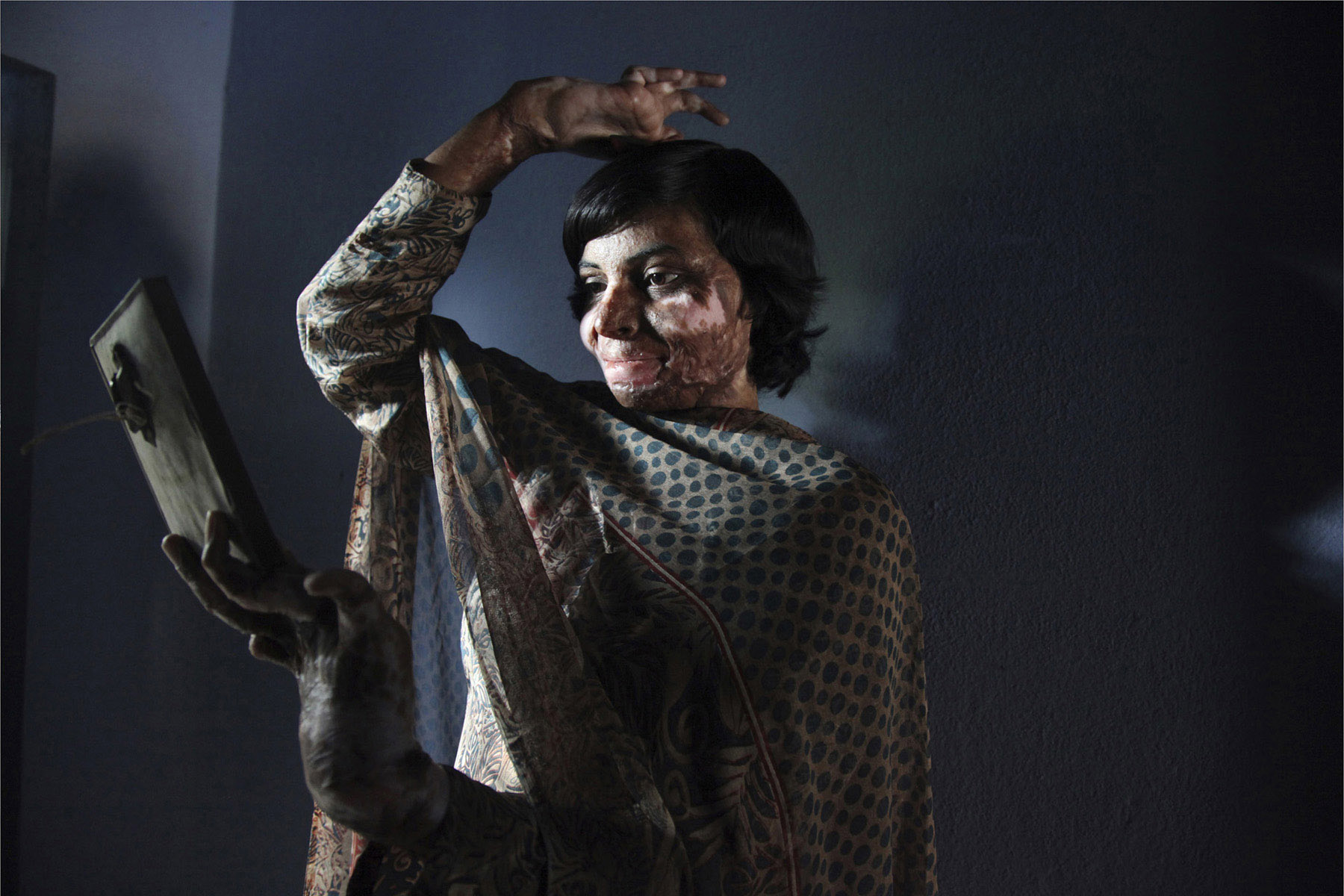
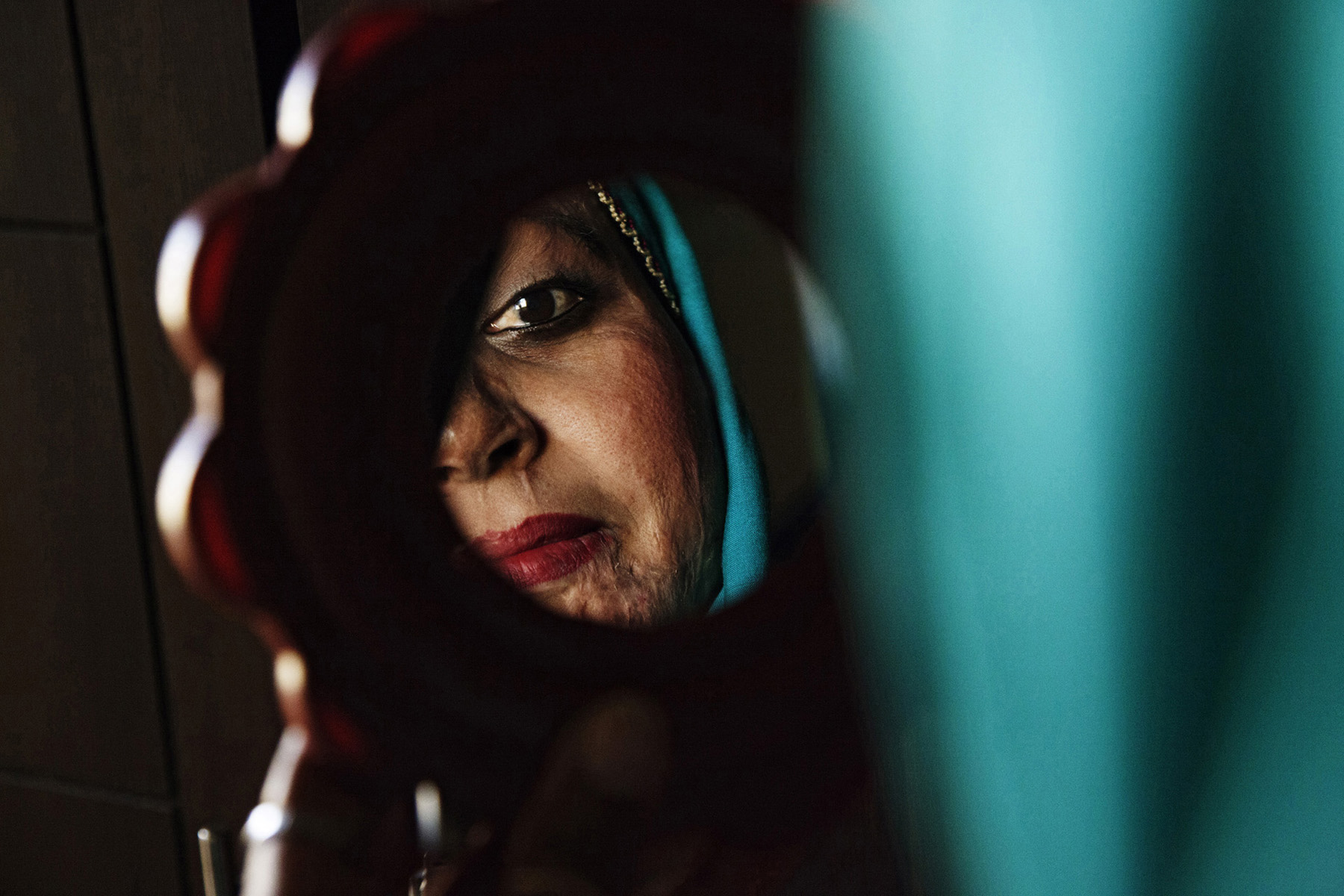
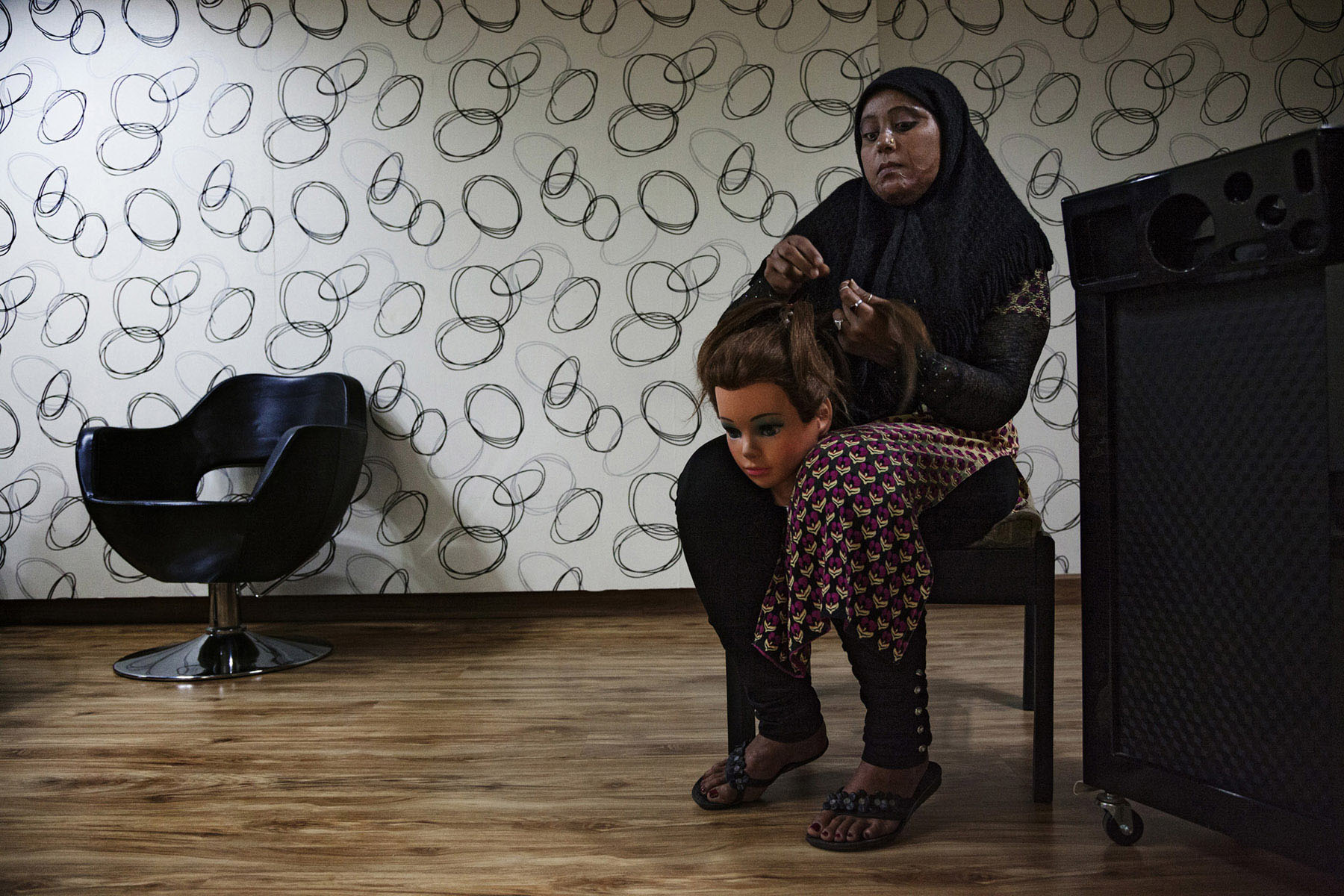
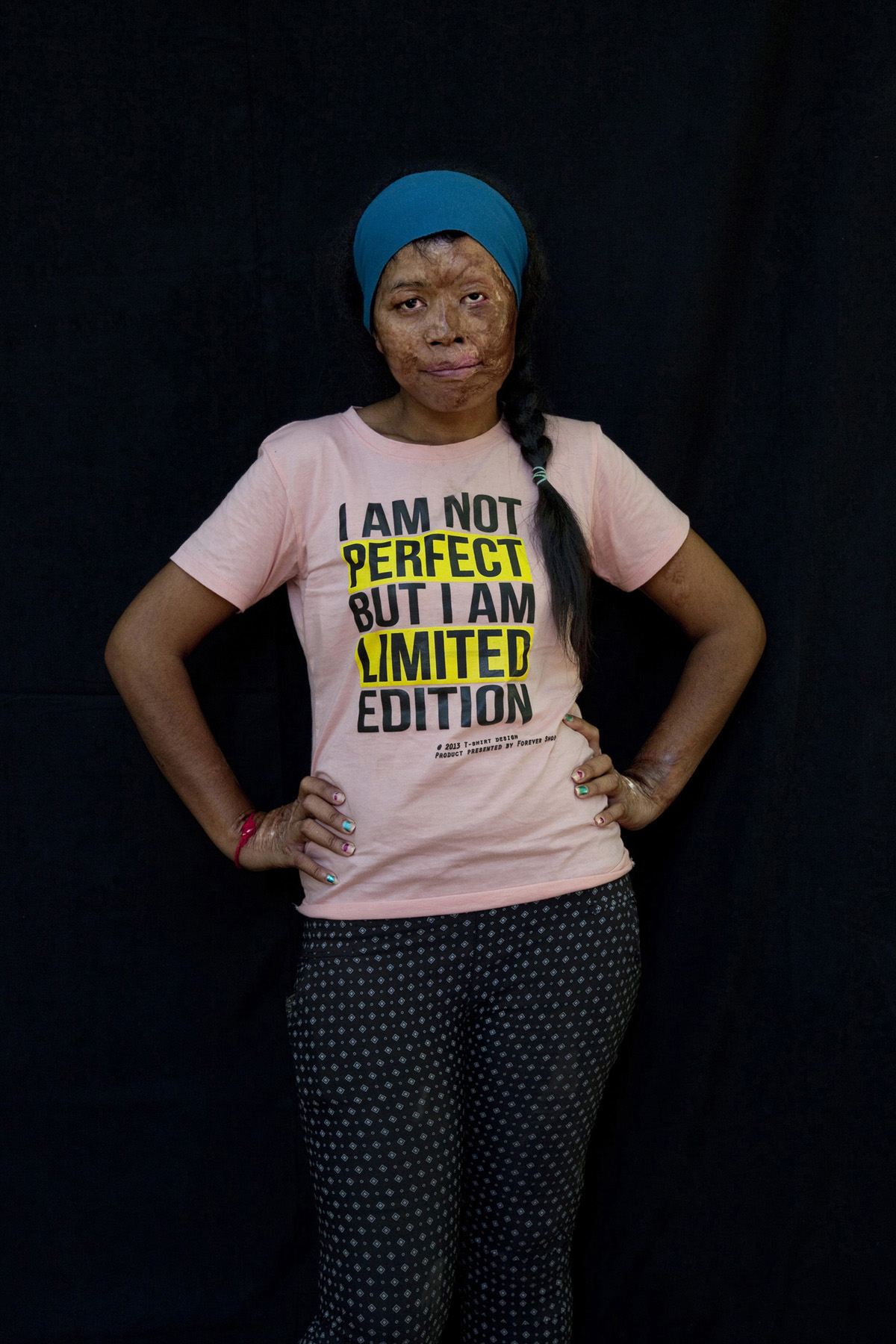
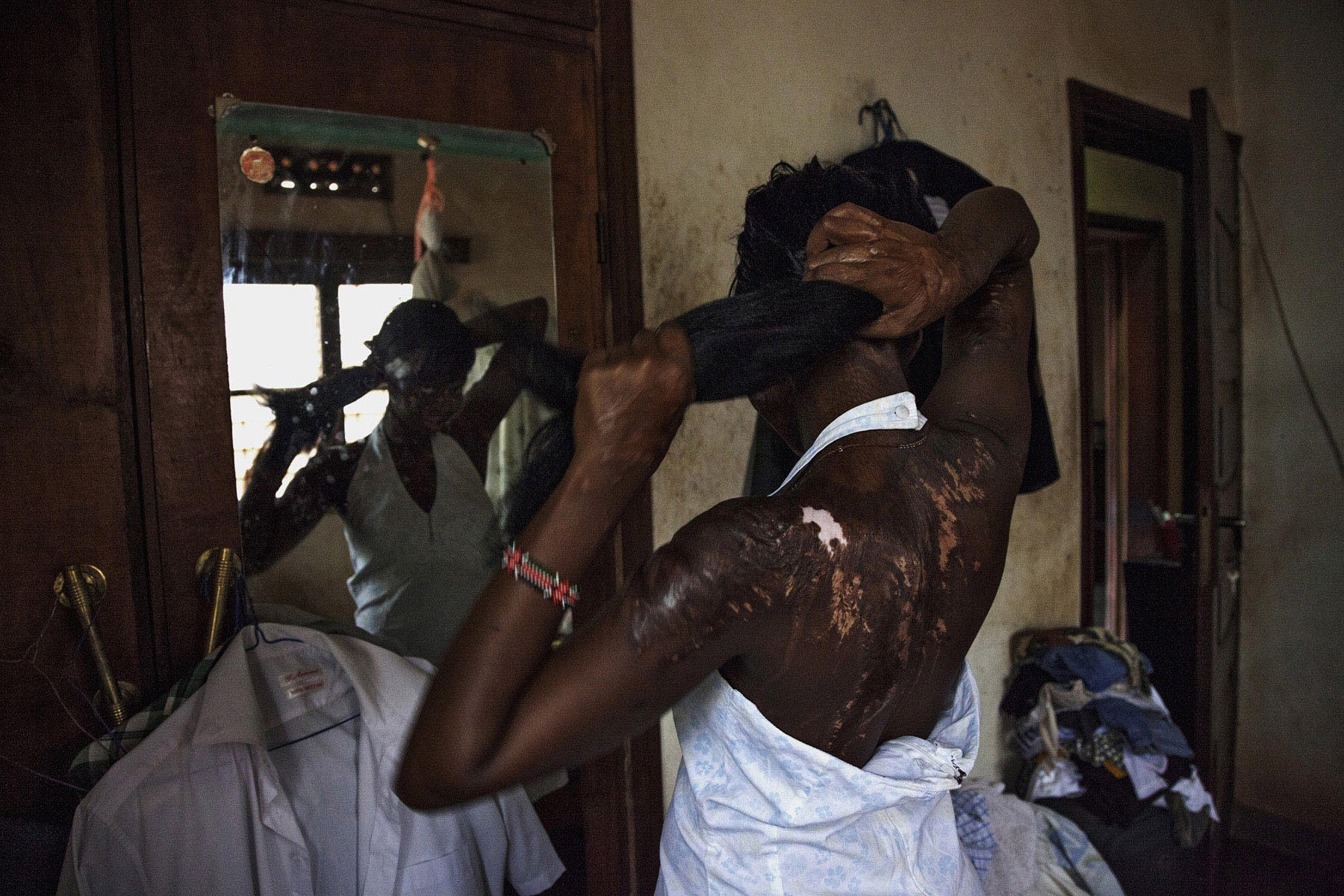
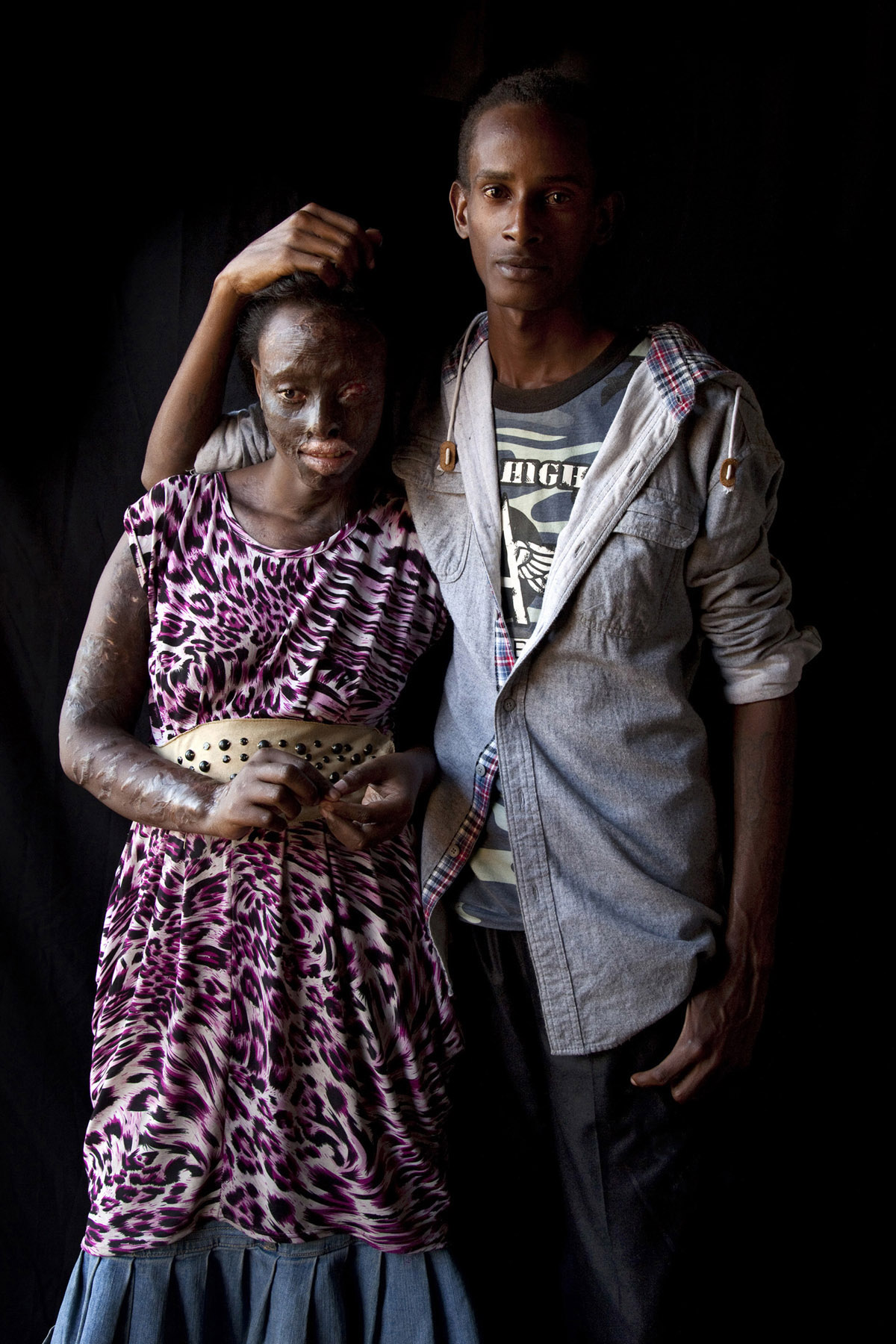
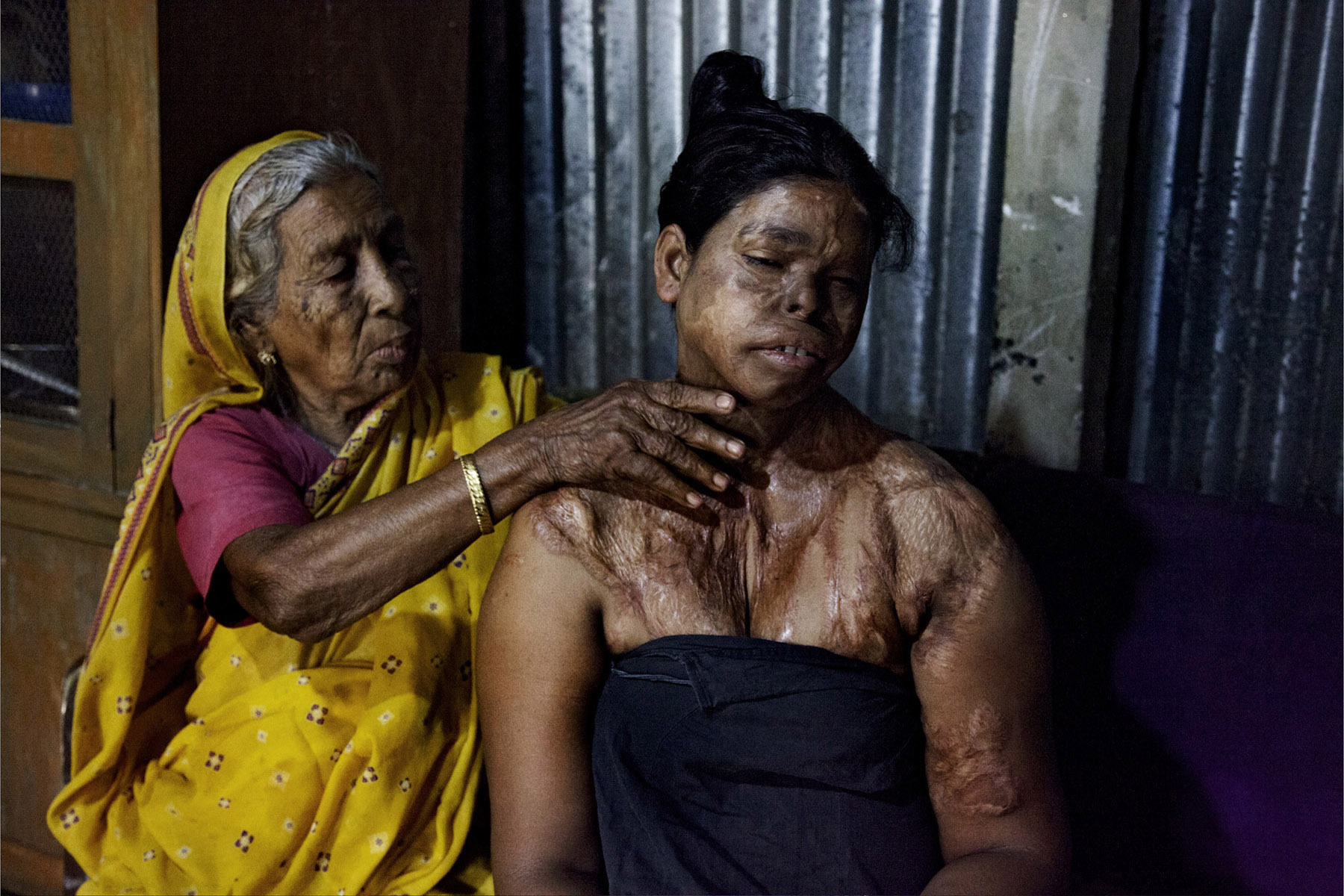
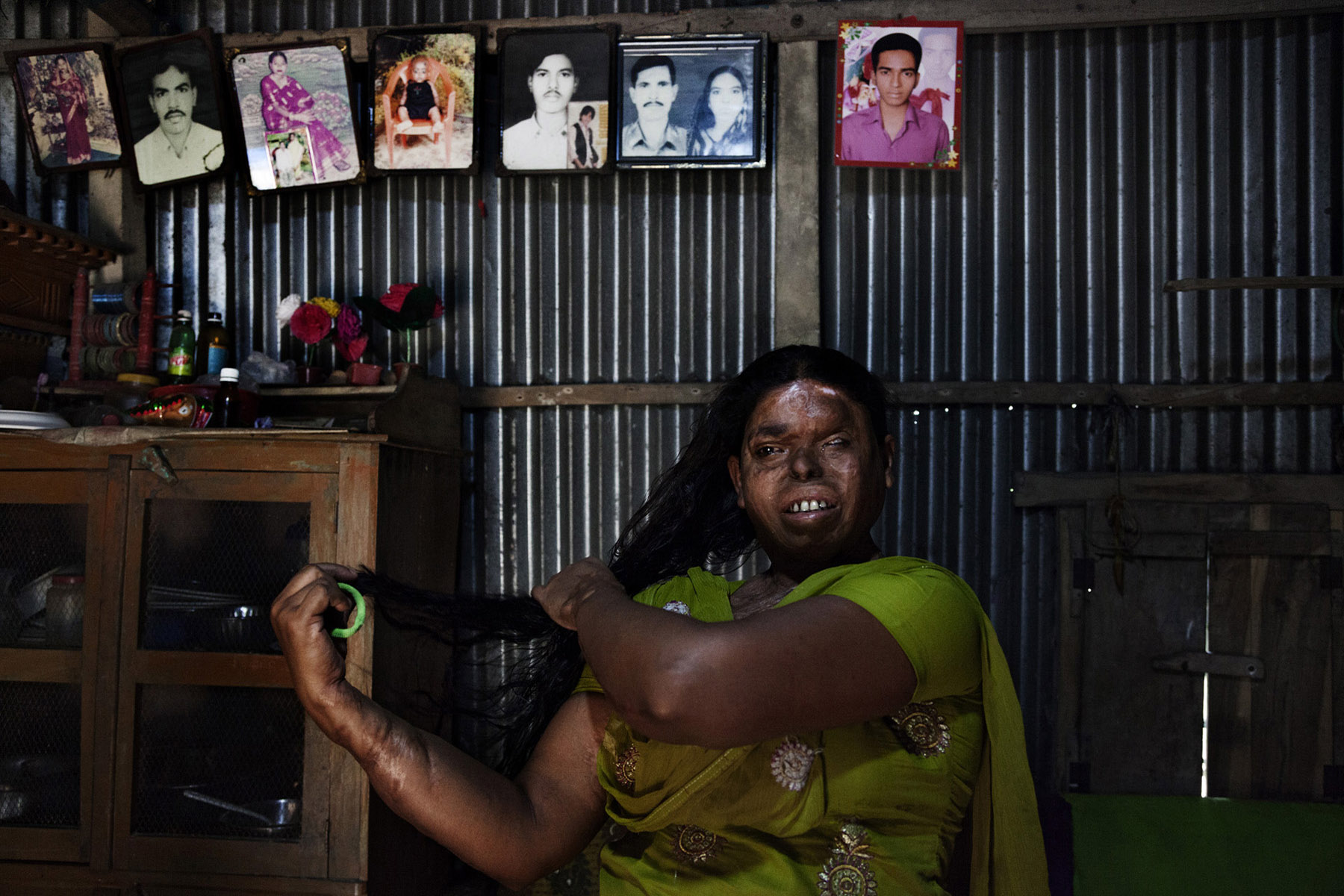
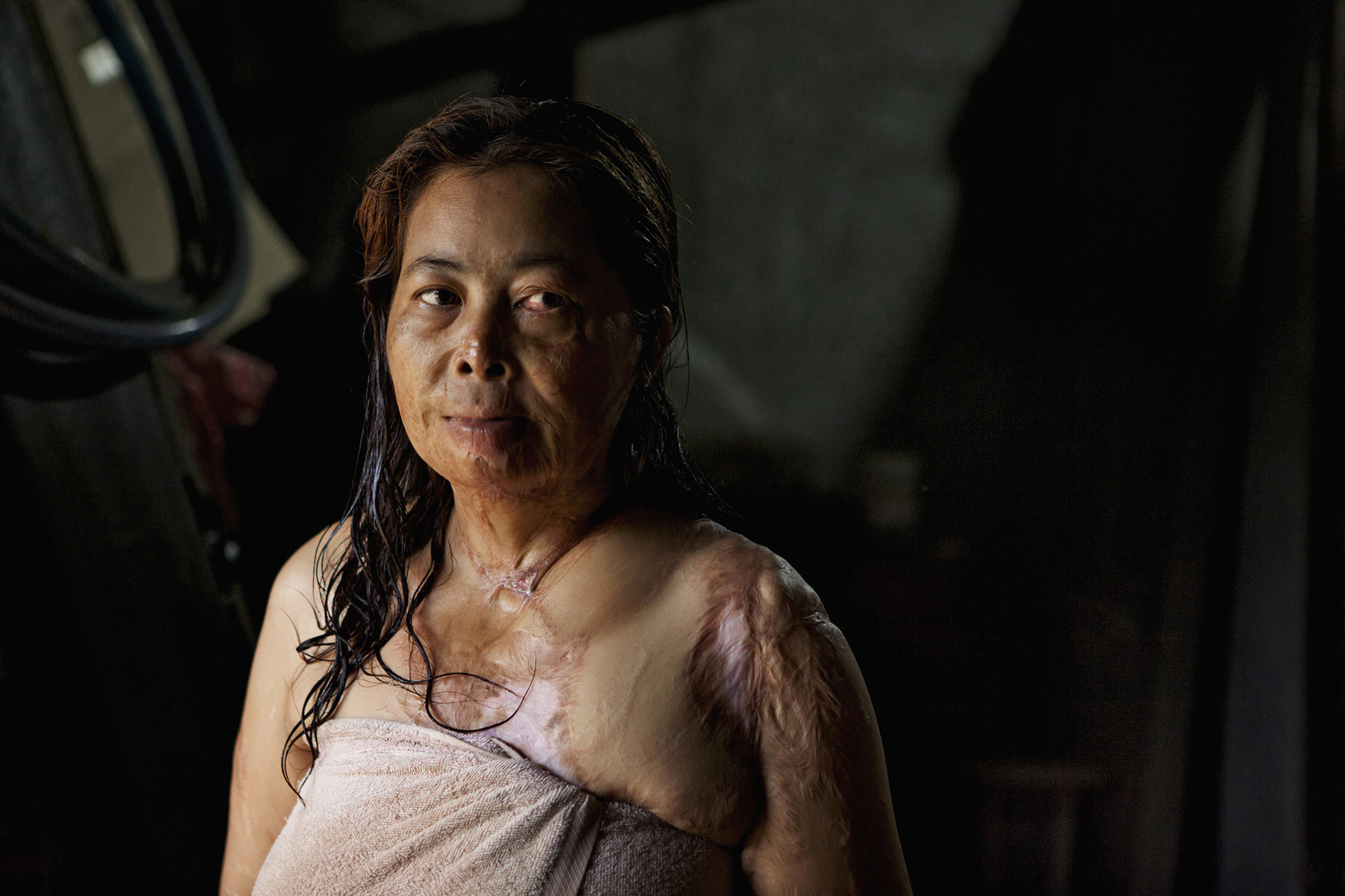
Je me suis rendue en Inde, au Pakistan, au Bangladesh, en Ouganda, au Népal et au Cambodge au cours de ces deux dernières années afin de faire le portrait et d’interviewer les femmes ayant survécu à des attaques au feu ou à l’acide. Mon souhait a été de documenter très précisément la vie quotidienne de chaque femme dans chacun de ces six pays, montrer ce que signifie vivre avec les stigmates d’une réprouvée dans la société correspondante. J’ai voulu capturer leur vie de tous les jours, leur volonté de survivre, la façon dont elles ont repris leur vie en main, ainsi que leurs moments de désespoir, de joie et de bonheur. Flavia, ougandaise, Neehaari, indienne, Renuka, népalaise, Farida, bangladaise et Nurat, pakistanaise, qui ont toutes subi cette tragédie, m’ont autorisée à partager des moments intimes de leur vie et m’ont montré ce que l’héroïsme signifie réellement. Des interviews révèlent un peu plus de leurs vies et de leurs émotions. Le fond noir, neutre avait pour objectif de faire abstraction de tout environnement social et de leur donner un sentiment de sécurité ainsi qu’un cadre spécial dans lequel elles puissent se sentir capables de se présenter et de poser comme bon leur semble et pas nécessairement comme victimes d’une tragédie. Le but était de montrer leur force intérieure et la paix qu’elles ont retrouvée après tous les combats et les souffrances. Je voulais ainsi leur rendre un visage et les rendre visibles.
On compte officiellement dans le monde environ 1500 attaques à l’acide par an, la plupart concerne des femmes. Le nombre de cas non recensés est bien plus important. Par peur des représailles les survivantes n’osent pas porter plainte.
Il est encore plus difficile de connaître le nombre de femmes attaquées au feu à ou de celles qui tentent de s’immoler afin d’échapper à une vie de sévices infligées par les maris ou les beaux parents. Ces attaques sont la plupart du temps maquillées en accidents ménagers.
La corruption, une loi peu réactive et la discrimination envers les femmes ancrée dans la culture favorisent ces agressions. Les motifs les plus courants sont, la jalousie, un amour non réciproque, l’infidélité, une dispute au sujet d’une dote ou d’un terrain. Alors que de nombreux coupables se promènent en liberté, les survivantes subissent quotidiennement des souffrances physiques et psychologiques.
J’ai souhaité capturer la beauté et l’assurance de ces femmes cachées derrière les cicatrices. J’ai voulu les rendre une fois encore visibles à la société.
Ann-Christine WOEHRL
“IN/VISIBLE“
It is their scars, which draw attention to them. They are openly stared at or eyed discretely. Some people look away immediately because they feel uncomfortable or want to forget what they have just seen. It is easier for society not to acknowledge those who are different, to ignore them and thus to make them invisible. Therefore, it is not only the visible scars from which survivors of fire and acid attacks and accidents are suffering for their whole life. Above all, it is other people’s reactions to their disfigurements, which are pushing them to the edge of society.
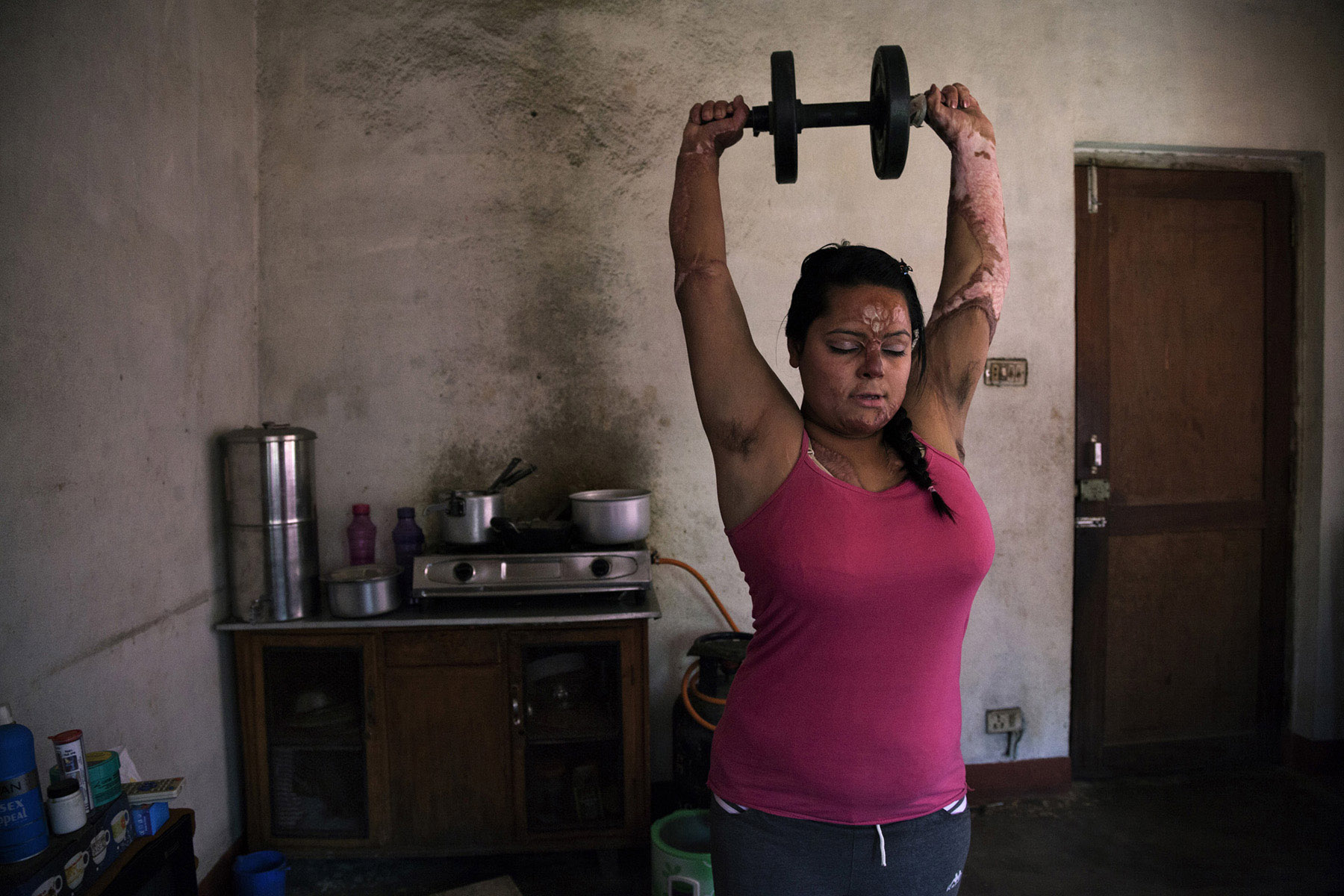
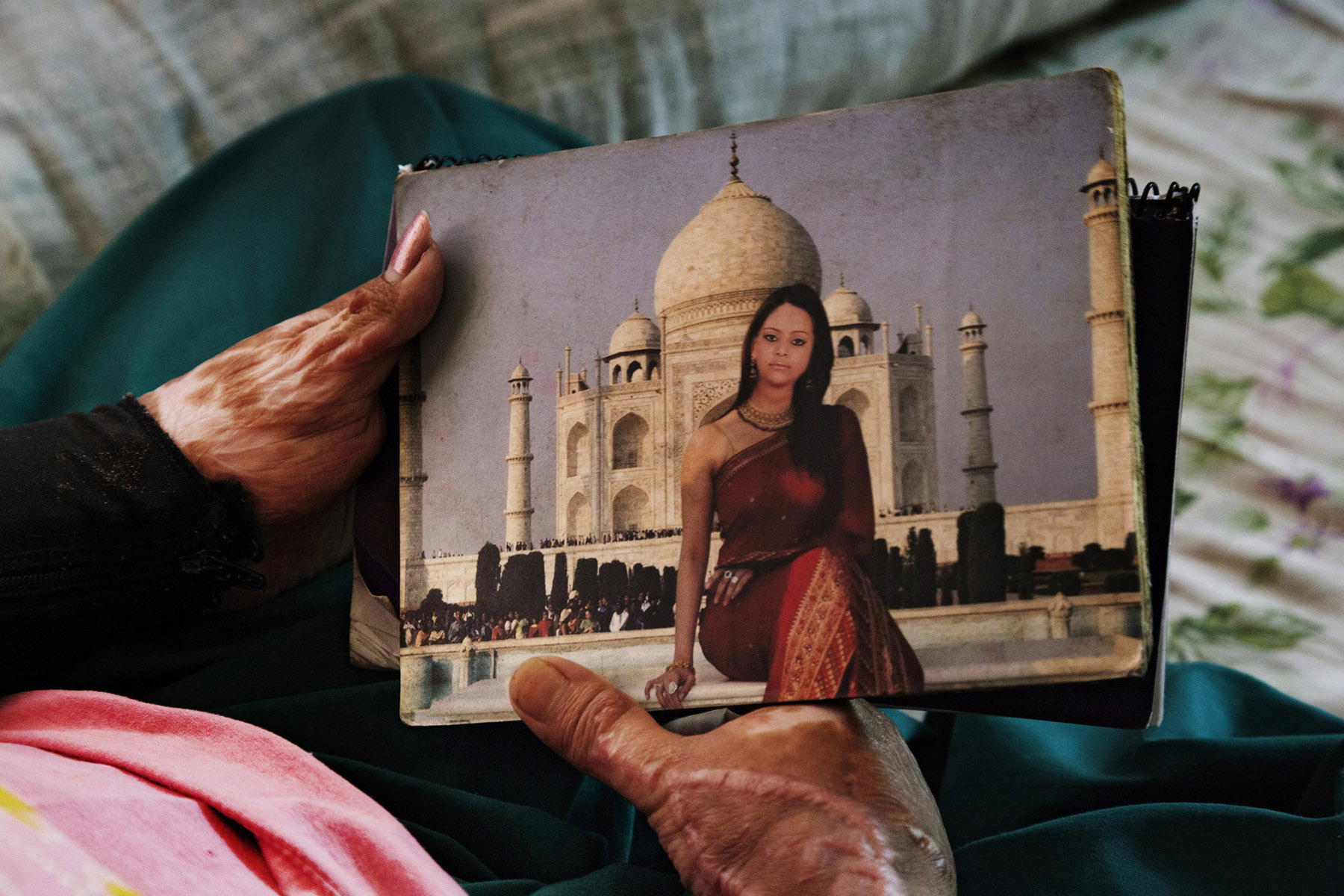
For my long-term project IN/VISIBLE I travelled to India, Pakistan, Bangladesh, Uganda, Nepal and Cambodia over the past two years to document, portray and interview female survivors of acid and fire attacks. My approach was to closely document the daily life of one woman in each of the six countries in order to show what it means to live with the stigma of an outcast in the according society. I wanted to capture their daily life, their will to survive, how they got their lives back as well as their moments of hopelessness and despair, joy and happiness.
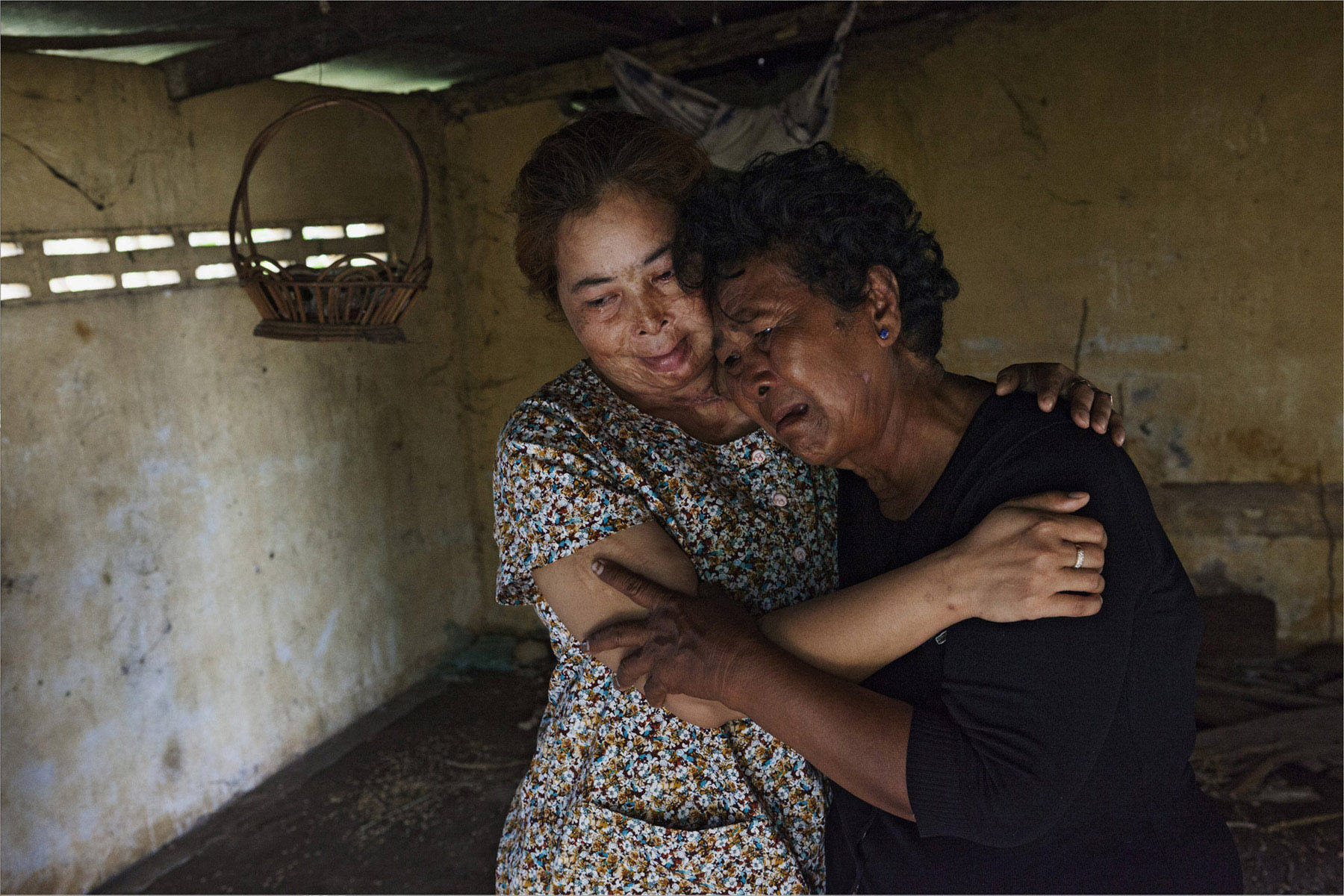
One of the women I met is Chantheoun from Cambodia. Twelve years ago, a jealous spouse threw acid on her. The acid ate away parts of her face, her arms and her chest, leaving the 39-year-old with vast disfiguring scars. In the years after the attack, she did not dare to venture outside. She was scared of the reactions of her neighbours and others. She isolated herself from society. Her only support came from her mother and sisters: “I have stopped thinking of myself since I have lost my beauty “, she says today. Flavia from Uganda, Neehaari from India, Renuka from Nepal, Farida from Bangladesh and Nusrat from Pakistan, who all have experienced their own tragedy, allowed me to share intimate moments in their lives and showed me what real heroism means. The photographs are a small selection showing their daily life, each of their struggle and their strength and determination. Attached in the captions are also transcribed interviews to reveal more of their lives and emotions.
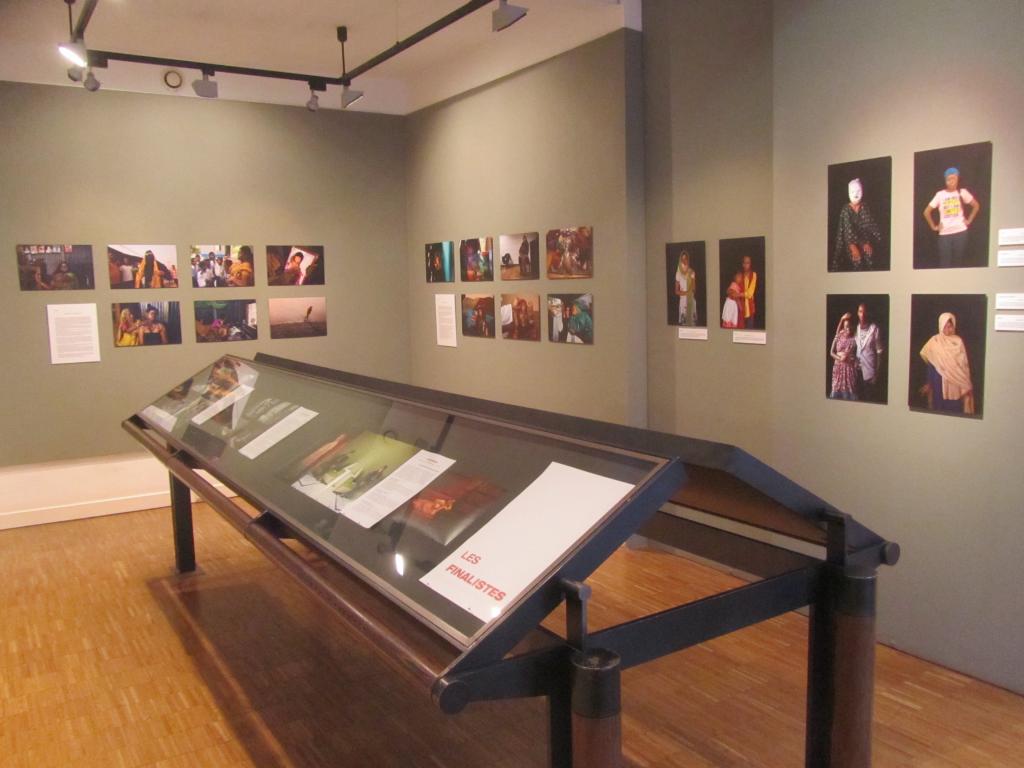
Besides I portrayed fort-eight women, eight in each of the six countries. With the portrait series I wanted to give them the opportunity to present themselves as individuals beyond the collective stigma of being branded. The neutral black backdrop was supposed to abstract from the social environment and to give them an atmosphere of security and a special – if celebratory – framework. A framework, in which they felt able to present themselves and pose as they felt right rather than to be presented as a tragic victim, but rather show their inner strength and peace they have gained after all their struggle and pain they’ve gone through. I wanted to give them a face again, to make them visible.
The women I visited are just a few of the many that are attacked with acid or fire to purposely disfigure or kill them. Officially there are around 1500 acid attacks reported worldwide every year. The majority of which are women. The number of unreported cases is estimated to be much higher. For fear of reprisal the survivors do not dare to press charges against the culprits. It is even more difficult to grasp the number of those that were set on fire with the help of kerosene or those trying to commit suicide by self-immolation to escape a dismal live of abuse and repression through husbands or in-laws. Those kinds of attacks are mostly covered up as household accidents.
Corruption, a weak rule of law and a culturally rooted discrimination against women are a fertile breeding ground for such attacks and self-immolation attempts. Common motives are jealousy, spurned love, infidelity, dispute over dowry or land.
While many culprits walk free, the survivors of the acid or fire attacks suffer lifelong physical and emotional pain. I wanted to capture the beauty and self-confidence hidden behind the disfiguring scars of these women and I want to make them visible to society once again.
For the project I closely collaborated with the Acid Survivors Trust International (ASTI) and especially with the partner organizations in the mentioned countries above: Acid Survivors Foundation in Bangladesh (ASF), Acid Survivors Foundation in Pakistan (ASFP), Cambodian Acid Survivors Charity in Cambodia (CASC), Acid Survivors Foundation in India (ASFI), Burn Violence Survivors in Nepal (BVS) and Acid Survivors Foundation in Uganda (ASFU).
For the realization of the project, I received in 2012 a grant by the German foundation VG Bild-Kunst/Stiftung Kulturwerk, which partly financed the project. With “IN/VISIBLE“ I want to raise awareness by drawing attention to a largely hidden form of violence. Once institutions, communities and individuals acknowledge its existence then steps can be taken to address the problem.
The accomplished project was exhibited at the Museum Fünf Kontinente (“UN/SICHTBAR” – Frauen Überleben Säure”) from 5th of June 2014 to 11th of January 2015 and published as a book by Edition Lammerhuber, realized in collaboration with the journalist Laura Salm-Reifferscheidt. The portrait “Christine and Moses” got recently selected for the Taylor Wessing Photographical Portrait Prize 2014 and is currently exhibited at the National Portrait Gallery in a group show from November 12th to February 22nd 2015. “IN/VISIBLE” will be exhibited from May 8th until September 22nd at the Museum Natur und Mensch in Freiburg.
Ann-Christine WOEHRL